Saturday, February 12, 2011

Friday, February 11, 2011

Response to Edward T. Hall's Article on Anthropology and Space

     The article explained that people act certain ways in certain environments and situations. People's actions and reactions to spaces also change with the number of people present, one person, a small group, a whole city, etc. Hall explains that each room in a house causes one to act, in what our society labels, accordingly. He defines this as "fixed-feature space," explaining that it has to do with territoriality. This fixed-feature space helps to organize activities for people entering a home. We live in a world where most rooms are easily differentiated from one another. We can look at a room and know this room is for food preparation, eating, sleeping, socializing, working, etc. For example, when you enter a house and you see a room with a stove, refrigerator, and counters in it your brain automatically tells you that it is a kitchen and a place to cook. If you happen upon another room that has a bed and dresser in it you know that it is a bedroom and a place of rest. Most people do not linger in the doorway of a bedroom because they know it is a private place that is owned by someone who lives in the house. When in someone else's home you know what rooms are open and what rooms are off limits. If you were to use the bathroom, you wouldn't go to the bathroom that is adjacent to someone's bedroom, you would use one that is more communally accessible. Commonly there are living rooms that are located in the same space as a dining room, subconsciously we are able to tell where that boundary is that separates the two. Humphry Osmond came up with a definition for a space that separates people, "sociofugal space." This refers to the fact that if a group of people were in that space that included both a dining area and a living area the separate spaces wouldn't face each other and the people inhabiting those spaces would probably only interact with those around them. I.E a person sitting on the couch would talk to the person in the chair next to them, not the person sitting around the table. In our society today the way humans interact with architectural space is more of a known way of acting instead of social experimentation.
    

Thursday, February 10, 2011

COLOR WEEK

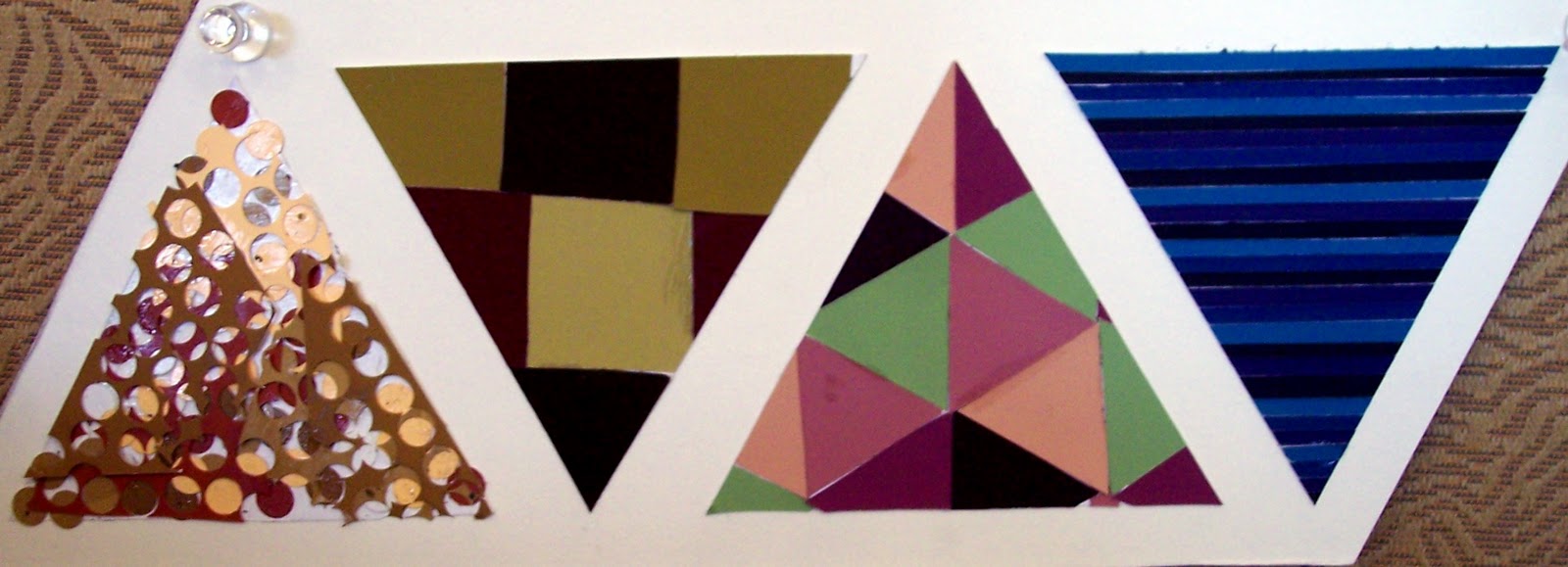
For the week of January 22nd our studio did studies on color. We all had to buy this pack of amazing colored paper and we used it throughout the week.


Tuesday, February 8, 2011

IARC video response

Dining in Different Cultures

Every culture has certain norms and expectations when it comes time to eat. The following paragraphs will look at the customs of China, Kenya, and France, all which can then be compared to our customs in the U.S.

Similarly to Americans, the Chinese commonly meet for three meals each day. A place setting consists of a bowl, chop sticks, a spoon, and a saucer; you do not use napkins during and receive a hot towel at the end of the meal. That alone says a lot about Americans, we commonly use one or more napkins during a meal. Most meals are composed of the same things. A grain of sorts is the main dish, accompanied by a “side” of meat and of vegetables.
 It is common for soup to be served as well. When a family sits at the dinner table the oldest people begin to eat first and it works its way down to the youngest. Unlike in America, where children seem to have evolved into very picky eaters, Chinese children are not allowed to be opinionated about their meal. They are taught to eat every portion of the meal equally and not show favoritism to one type of food in any way. It is thought to be very disrespectful to not finish all of your meal, especially the main grain. I believe that the Chinese eating habits are much more complaisant than Americans'.

Kenya tends to have very formal dining but, it varies from social class and location. 
It is important to arrive to a meal on time and rude to turn down an invitation. Like in the U.S, you are expected to wash your hands before a meal. When eating, Kenyans only use their right hand. It is rude to refuse to eat a certain food, each food presented should be tried, at least. When hosting a guest it is tradition to kill and roast a goat. My friend visited Kenya last year and they killed a goat in her and her families honor. In addition to roasting the goat, they drained the goat's blood and made an herbal drink with it. Seeing as it would be very rude to not accept this special drink, she and her family had to drink it. Just like in China, Kenyans eat in order of age, starting with the elders.
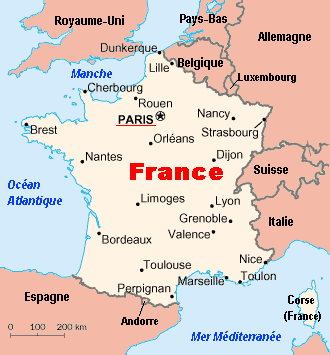
France named best place in the world to live 5th year in rowLike in Kenya, meals are on the formal side in France. Most meals are three courses and are served with an abundance of bread and wine. It is common for children to drink wine during a meal as well. Unlike Americans, the French keep their hands visible and on the table at all times, never in their laps. You are expected to eat all the food given to you. At my house, our meals are on one plate and include a grain, a meat, and a vegetable. We usually all sit down, pray (christian), and eat. Traditionally, a french meal will include: hors d'eovres, a main course, salad, a cheese plate, and occasionally desert. No one is to eat until the head of the house says “bon appetit!”
Different cultures have different customs and ways of life, I find it to be very interesting to read about and experience these differences. This is a link that lists foods that some places think are amazingly delicious but, seem quite odd to most Americans. http://www.ranker.com/list/disgusting-foods-that-other-cultures-actually-love/justin-jones

Monday, February 7, 2011

"Worship by the Shore" RR3

"Commodity, Firmness, & Delight" BP3

       On Friday I was sick and couldn't go on the walk around campus, so I ended up going to the the three buildings alone. I think it was good that I went alone because I was able to spend time at/in/around those places and fully take in their architectural layout.


       The MHRA building has been one of my favorites since I toured UNCG before freshman year. I believe that it has a very high "Commodity, Firmness, and Delight" rating. The MHRA building is a place where students can go and study humanity . Humanities studies include things like language, law, history, literature, religion, the arts, and much more, all of which are incredibly important in our lives today. Constructed of brick, stone, glass, metal, sheet rock, and plaster, this piece of architecture is very stable. It features beautiful, doric, columns outside the building that enhance it's stability and appearance.

 The MHRA building is located on the corner of campus which symbolically emphasizes it's importance. The main entrance is a tall cylinder, marking it as a "sacred spot." Windows cover the walls of the cylinder, allowing as much light as possible enter the building. The floor has a beautiful design made of tile, granite, and stone. Because of it's usefulness, architecture, and aesthetic appeal I believe that the MHRA building is one place on campus with acceptional "Commodity, Firmness, and Delight."